How It Works
The Docker client combines local computation and storage with on-demand central services. Spectral searching, omics analysis and private-data management run in your deployment. The central platform supplies reference resources, missing compound information and user-initiated sharing services.
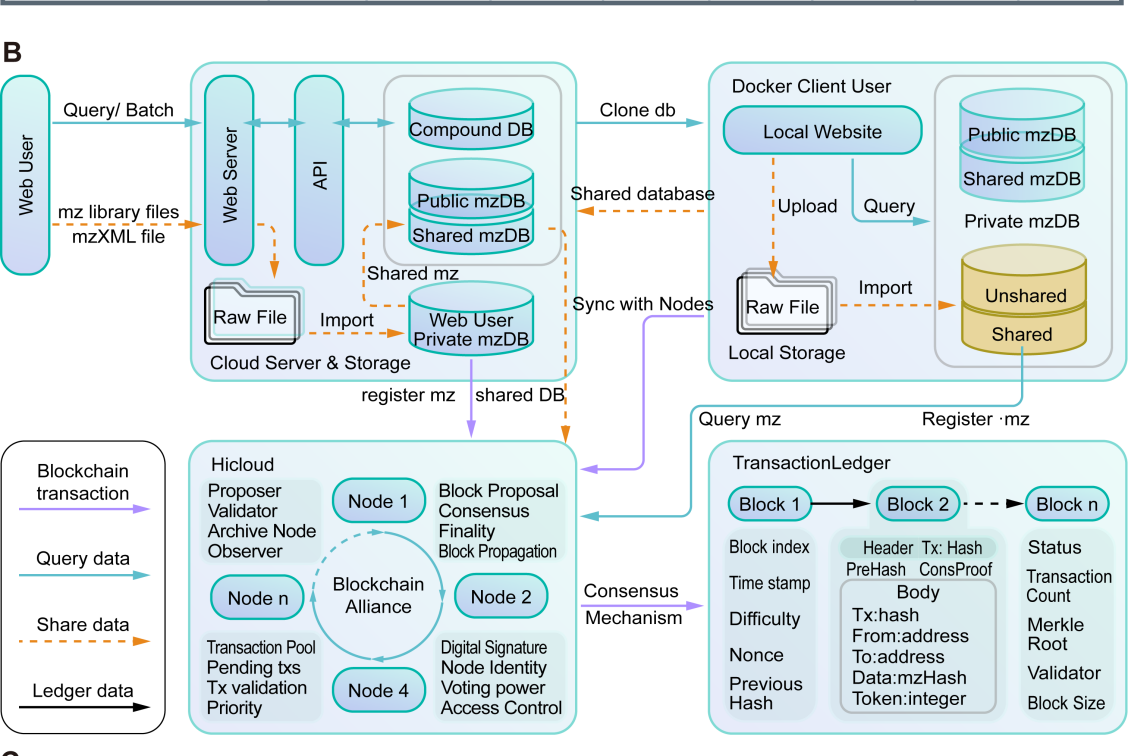
Figure 1. Integration of the cloud platform, local Docker client and blockchain services (from manuscript Figure 1B; click to enlarge).
1. The three containers
| Compose service | Role | Connectivity and storage |
|---|---|---|
metabospark | Serves the web application and runs spectral searches, batch jobs and private-data management. | Maps host port 8090 to container port 8090 by default; mounts the complete metabobank_data/ directory. |
mongodb5_client | Stores reference spectra, private spectra, uploads, samples and local results. | Uses internal port 27023, not published to the host by default; persists database files under metabobank_data/dbs/. |
rserve | Provides the R backend for omics statistics and plots. | Called by the web container at rserve:6322; shares the data volume to read CSV files and write results. |
All services use the same Compose bridge network and communicate by service name. Uploads, analysis results and database files live on the host, not only in container writable layers. Stopping or removing containers therefore does not automatically delete these data.
2. What the installer does
- Checks Docker, Compose, the daemon, the web port and free disk space.
- For an online installation, downloads missing Compose, image and checksum files while reusing files already present.
- Verifies downloads against
SHA256SUMS.txtand imports images withdocker load. - Writes or updates
.env, prepares persistent directories and starts the Compose services. - Waits for database and web health checks, then prints the actual URL and data directory.
3. Local processing versus central services
| Performed inside the local deployment | Requires the central platform |
|---|---|
| Single-spectrum and batch searches, omics analysis, private-spectrum import and management, and storage of samples, groups and local results. | Account verification, missing compound/CID details and adduct suggestions, public-spectrum statistics and incremental synchronization, private-spectrum registration, token and transaction history, and restricted-resource access. |
The local MongoDB instance primarily contains the logical mass, batch and users databases. The complete compound reference layer and blockchain services remain central. Public and All-User-Shared spectra are reusable references that can be synchronized locally, whereas Docker-Private-Unshared data remain inside each deployment.
4. Private-spectrum sharing and blockchain registration
The sharing workflow starts only when you explicitly run single or batch Register in Library Manage:
- Confirm that the data are self-produced or that you have the right to submit them, select a licence, and review the visibility and Query Cost statement.
- The client checks the selected spectra and required fields. If an adduct is missing, central services can suggest candidates from the CID exact mass, precursor m/z and ion mode.
- The client sends the selected spectra, required metadata, licence and credentials to the central API. The server verifies identity and permissions and applies quality-control and redundancy checks.
- Eligible spectra enter the All-User-Shared library. The central RPC backend records the Data-Hash-associated blockchain event and contribution, then returns the transaction result.
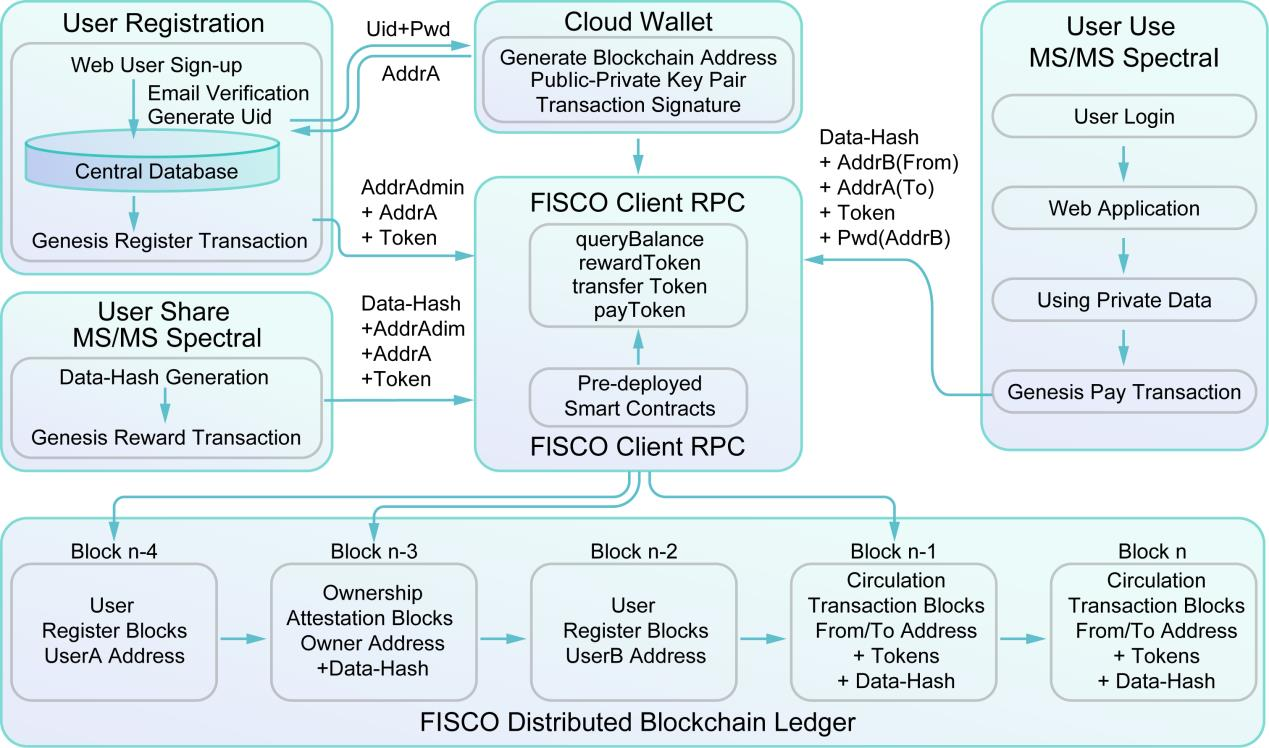
Figure 2. Private-spectrum sharing, Data-Hash, central RPC and ledger records (from the manuscript Supplemental Information; click to enlarge).